
Walking Along The Forgotten Paths Of Pune
Everywhere I look, are ugly steel and concrete structures. Every building looks like boxes stored on top of one another. Walkways full of people and hawkers. Roads unseen because of vehicular traffic. Horns blaring, Faces zooming past, no other thought, except to reach the other end. The trees on the sidewalk sparse and few, look as though they are tired of being alive. The sun blazes mercilessly even at an early hour....
It was just, such a warm morning that I found myself at the footsteps of the Shaniwarwada. A few like minded people had gathered around there.
We were to embark on a journey into the past. To visualise an era long lost, not even found in the books of popular history.
 |
| Saili Palande Datar and Yashodhan Joshi with our group |
 |
| Konkan Darwaza |
Sayali Palande Datar and Yashodhan Joshi, Indologists and experts in the field of history were going to take us on a tour into Pune as it was centuries ago.
Shaniwarwada was the meeting point and from there we were to walk around in the lanes and pathways, looking at structures and ruins of eras, lost in the sands of time.
Our first stop, was at the Shaniwarwad end of the PMC bridge. Tucked away amongst apartments and offices were the remnants of a rampart. This was the Konkan Darwaza or parts of it. steps and a half fallen wall belonging to the 12 centuryAD.
We then took the road to "Kasba Ganpati".
 |
| Deep Mal. |
 |
| Kasba Ganpati |
Known as the "Gram Daivat", or the Lord of the city, was and till this day is worshipped by the people. He is the 'Manacha Ganpati or (the Highly revered one).
Built as early as the Yadava period, some structures like the inner pillars are still in existence. The Deep Mal or the light tower, could have been built in Shivaji"s reign. Jijabai, Shivaji's mother reinstated the idol. Later, in the Peshwa era, the temple, continued holding pride of place.
Just behind the temple lies a maze of lanes. In every lane are structures and houses, we could see wooden carvings and archways, giving us the period of their construction.
Leaving behind the roads it actually felt like we were entering a Kasba. There were lanes leading to other smaller lanes which we were told housed people of particular professions. Each lane was named after a profession. For example there was the 'Shimpi Ali' or Tailors lane. Each house here had a 'Chabutara' or a platform. in the olden days, the tailors would sit with their paraphernalia, stitching for the royals and commoners. As it is today,people had people had their own tailors whom they would go to.

The 'Tambdi Ali' or the Copper Lane, where copper and brass pots pans and utensils were made in various sizes and shapes, according to the need of customers. Sadly, today, just a few workshops exist. People of the community though still reside in the Ali.
We went to one such workshop, and the whole process of turning a simple slab of Copper, into an artistic pot was shown and explained. What surprised me was the ease in which a piece of copper was transformed in no time.
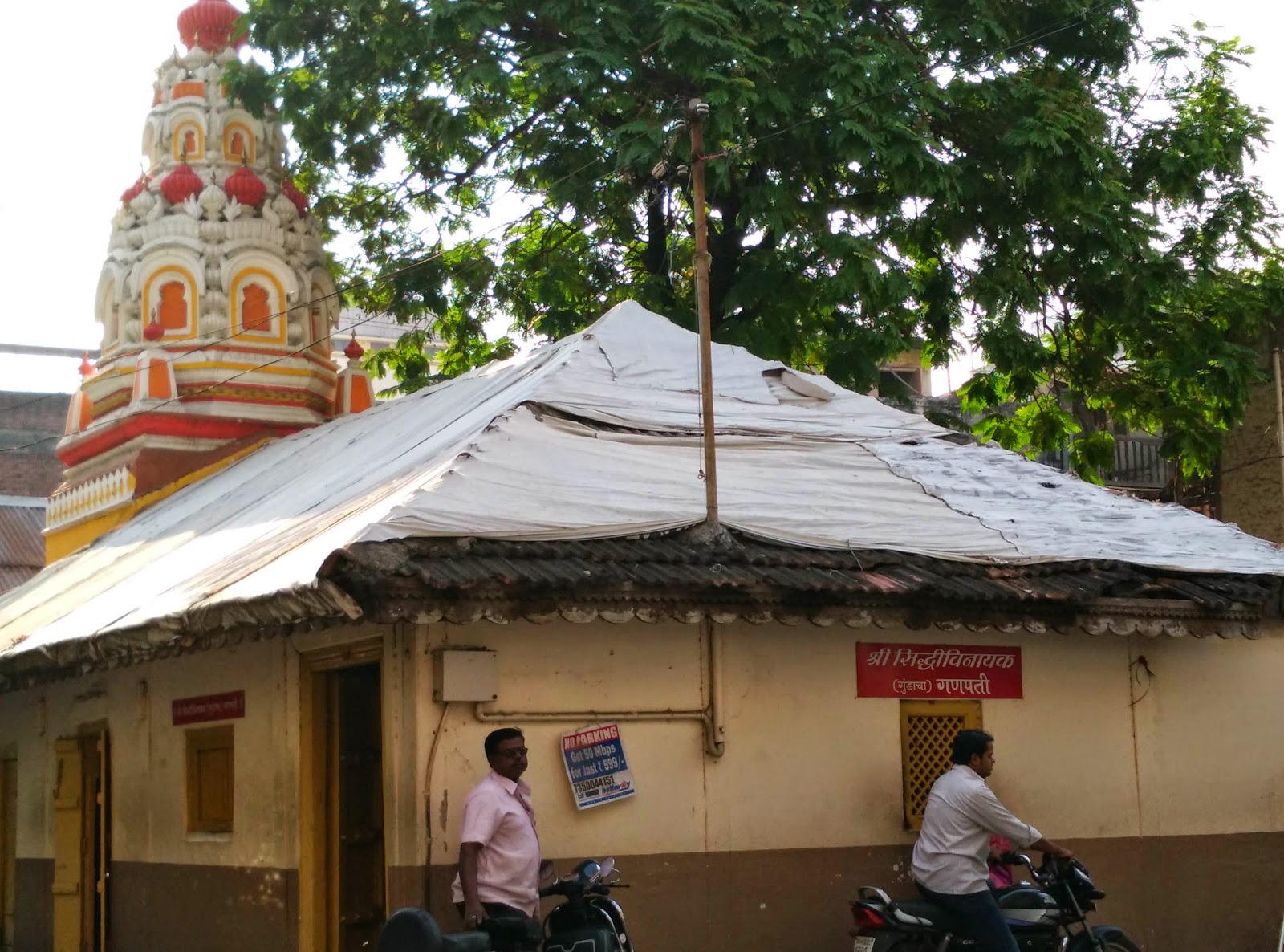
When Pune was inhabited again in the 10th /11th Century, people were God fearing. On the boundaries of Pune, temples were built of specific Gods, who would protect the citizens of the village. The Nagareshwar and Ganesh temple is witness to this era. Although a lot of maintenance has been necessary over the years, the original structure still stands.


Moving on, we visited what was the most enthralling structure, I had ever come across. It was the Trishund Ganpati tempe. Tucked away in Somwar peth, this temple, just blows your breath away. The exterior is beautifully carved in wood and stone, It stands apart amongst a mixture of old and new dwellings.
The idol of Ganesh has three trunks. Built between 1754 and 1770, it is still a privately owned temple. The samadhi of Gosavi Maharaj, is said to be placed in a chamber below the idol. Even today the Gosavi Clan own the rights to this temple.
The speciality of this temple is that each ruler has added his imprint or stamp to it.


We next walked up to the Shitole Wada. This was in the 'Phani Ali', or Comb Lane.
Sardar Shitole owned a lot of land in Punewadi. It was from him that Bajirao Peshwa the 1st. bought the land on which Shaniwarwada stands. Some facade of the Shitole wada can still be seen. The rest is now a modern structure.
The Phani Ali leading to Shitole wada, was where combs made of wood and horns were made and sold.
The Talim is what the modern Gym is to us today. We could see the various exercise equipment there. This was only meant for the men. Women were not allowed to enter the Talim.
At the end of our walk Saili Palande Datar showed us photographs of artifacts found in these areas belonging to as early as the 3rdC.
The lanes were winding and intertwining. The senses of hearing and sight were at there peak. The mind was overwhelmed with getting a small glimpse of the past.
Walking, stopping and listening and then walking again through those lanes, we arrived back to the spot where we had begun our heritage walk...The Kasba Ganpati.
Once again, the blaring horns, the rush of people hurrying, the new constructions were onto us, reminding us that this now is the present. The past left far behind.
The pictures are there to remind me of our rich past. A reminder that the past will live on, if not through the passage of time, then through these pictures.


Just behind the temple lies a maze of lanes. In every lane are structures and houses, we could see wooden carvings and archways, giving us the period of their construction.
 |
| Arches and Doors |
 |
| Old Houses |
Leaving behind the roads it actually felt like we were entering a Kasba. There were lanes leading to other smaller lanes which we were told housed people of particular professions. Each lane was named after a profession. For example there was the 'Shimpi Ali' or Tailors lane. Each house here had a 'Chabutara' or a platform. in the olden days, the tailors would sit with their paraphernalia, stitching for the royals and commoners. As it is today,people had people had their own tailors whom they would go to.
 |
| House in Shimpi Ali |
 |
| Shimpi Ali |
The 'Tambdi Ali' or the Copper Lane, where copper and brass pots pans and utensils were made in various sizes and shapes, according to the need of customers. Sadly, today, just a few workshops exist. People of the community though still reside in the Ali.
We went to one such workshop, and the whole process of turning a simple slab of Copper, into an artistic pot was shown and explained. What surprised me was the ease in which a piece of copper was transformed in no time.
When Pune was inhabited again in the 10th /11th Century, people were God fearing. On the boundaries of Pune, temples were built of specific Gods, who would protect the citizens of the village. The Nagareshwar and Ganesh temple is witness to this era. Although a lot of maintenance has been necessary over the years, the original structure still stands.
 |
| Nagareshwar Temple |


 |
| Ganpati Temple |
Moving on, we visited what was the most enthralling structure, I had ever come across. It was the Trishund Ganpati tempe. Tucked away in Somwar peth, this temple, just blows your breath away. The exterior is beautifully carved in wood and stone, It stands apart amongst a mixture of old and new dwellings.
The idol of Ganesh has three trunks. Built between 1754 and 1770, it is still a privately owned temple. The samadhi of Gosavi Maharaj, is said to be placed in a chamber below the idol. Even today the Gosavi Clan own the rights to this temple.
The speciality of this temple is that each ruler has added his imprint or stamp to it.

 |
| Trishund Ganpati Temple |

We next walked up to the Shitole Wada. This was in the 'Phani Ali', or Comb Lane.
Sardar Shitole owned a lot of land in Punewadi. It was from him that Bajirao Peshwa the 1st. bought the land on which Shaniwarwada stands. Some facade of the Shitole wada can still be seen. The rest is now a modern structure.
The Phani Ali leading to Shitole wada, was where combs made of wood and horns were made and sold.
 |
| Shitole Wada |
 |
| Phani Ali Talim |
The Talim is what the modern Gym is to us today. We could see the various exercise equipment there. This was only meant for the men. Women were not allowed to enter the Talim.
At the end of our walk Saili Palande Datar showed us photographs of artifacts found in these areas belonging to as early as the 3rdC.
The lanes were winding and intertwining. The senses of hearing and sight were at there peak. The mind was overwhelmed with getting a small glimpse of the past.
Walking, stopping and listening and then walking again through those lanes, we arrived back to the spot where we had begun our heritage walk...The Kasba Ganpati.
Once again, the blaring horns, the rush of people hurrying, the new constructions were onto us, reminding us that this now is the present. The past left far behind.
The pictures are there to remind me of our rich past. A reminder that the past will live on, if not through the passage of time, then through these pictures.


